
Known test
A result without a method is incomplete. The setup decides which paths contributed to the number.
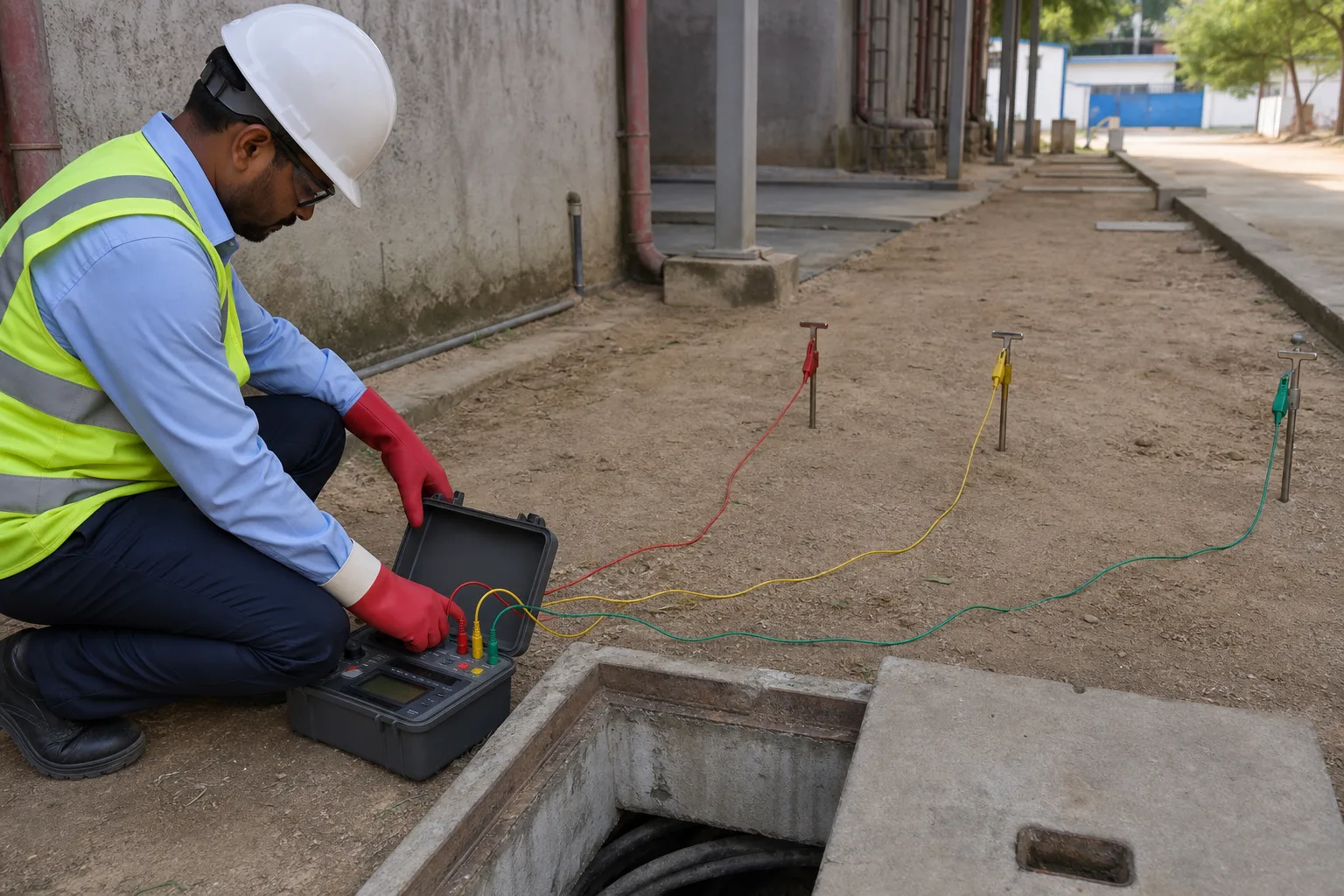
Measurement guide
Interpret earth resistance through the test method, instrument, weather, pit identity and connected condition before approving corrective work.
Discuss the project inputsDirect answer
The number describes one test. Record the pit identity, duty, method, instrument, weather, temporary-probe arrangement and connected or isolated condition before deciding what it means.
Compare it carefully. The project requirement and earlier readings matter more than a universal pass value copied from another plant, soil type or earthing duty.
A result without a method is incomplete. The setup decides which paths contributed to the number.
Parallel paths can lower a connected reading. Record whether isolation was safe, possible and performed.
Weather and soil moisture move results. Compare like conditions and explain material differences.
Technical view
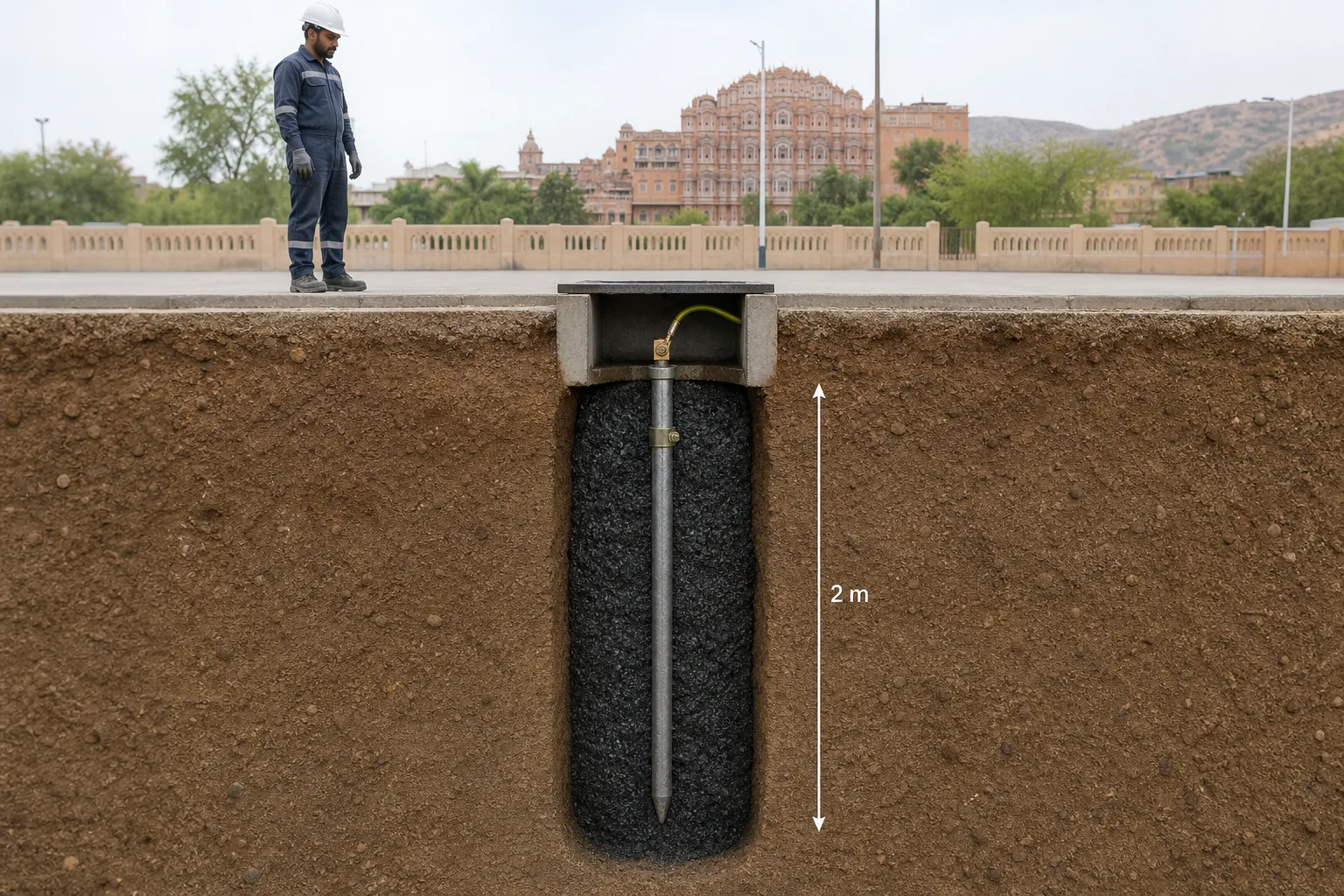
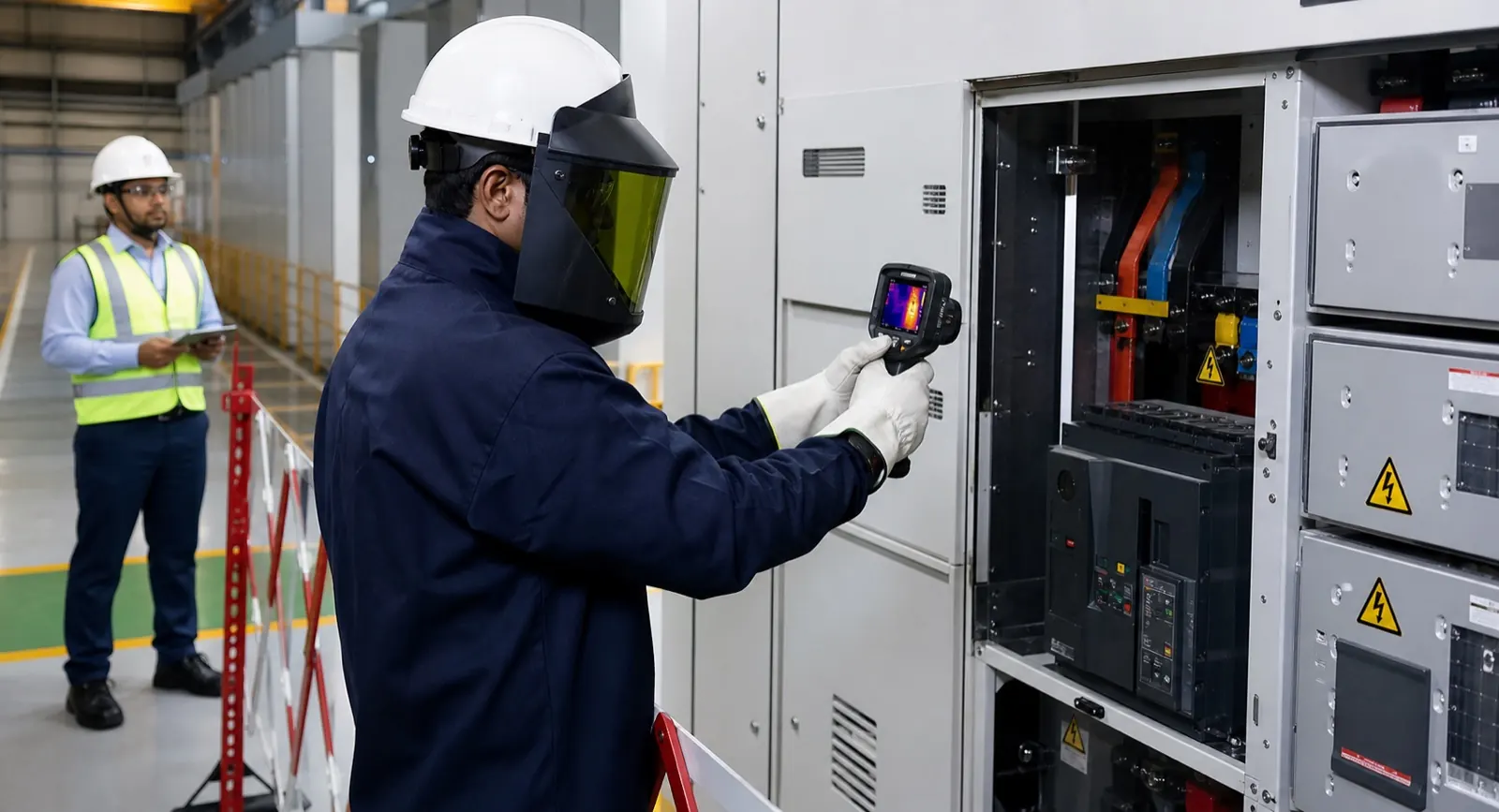
Ask before comparing. Fall-of-potential, selective or other methods see the network differently, and a multimeter continuity check is not a site earth-resistance measurement.
Probe arrangement matters. Temporary electrode position, available ground and interference from buried metal can change the curve or stability of a field result.
Soil is not a resistor in a box. Moisture, season and recent rain alter contact conditions, especially near the surface and around disturbed pits.
Record the day honestly. A wet-season number can be useful, but it should not be presented as though weather had no bearing on future dry conditions.
Inspect first. Loose terminals, broken conductors, flooded chambers, corrosion, hidden parallel paths or an incorrect test setup may explain the result without condemning the electrode body.
Then retest. Correct the identified defect and repeat the measurement with its method and condition recorded before recommending excavation or another pit.
Decision sheet
A certificate should let another engineer understand and repeat the measurement. One handwritten number cannot do that.
Working sequence
Do not jump from number to new pit. Check the identity, setup and physical path first.
Match the chamber, earth duty and drawing before connecting the instrument.
State method, probes, connected condition, weather and any safe-access limits.
Check chamber, terminal, conductor, test link and visible interfaces for defects.
Repeat the measurement after repair and compare it with the project requirement and history.
Questions that change the scope
The project decides it. Duty, protection design and applicable requirements control acceptance.
Do not present a continuity reading as an electrode-to-earth test. A dedicated method and instrument are required.
Yes. Parallel paths may contribute, which is why the connected state belongs in the record.
No. Connections, chambers and network performance still need inspection and measurement.
Send the real inputs
Send the pit identity, duty, method, instrument, weather, connected state, previous results and photographs. We will identify what is missing before recommending corrective work.
Send the requirement on WhatsApp