
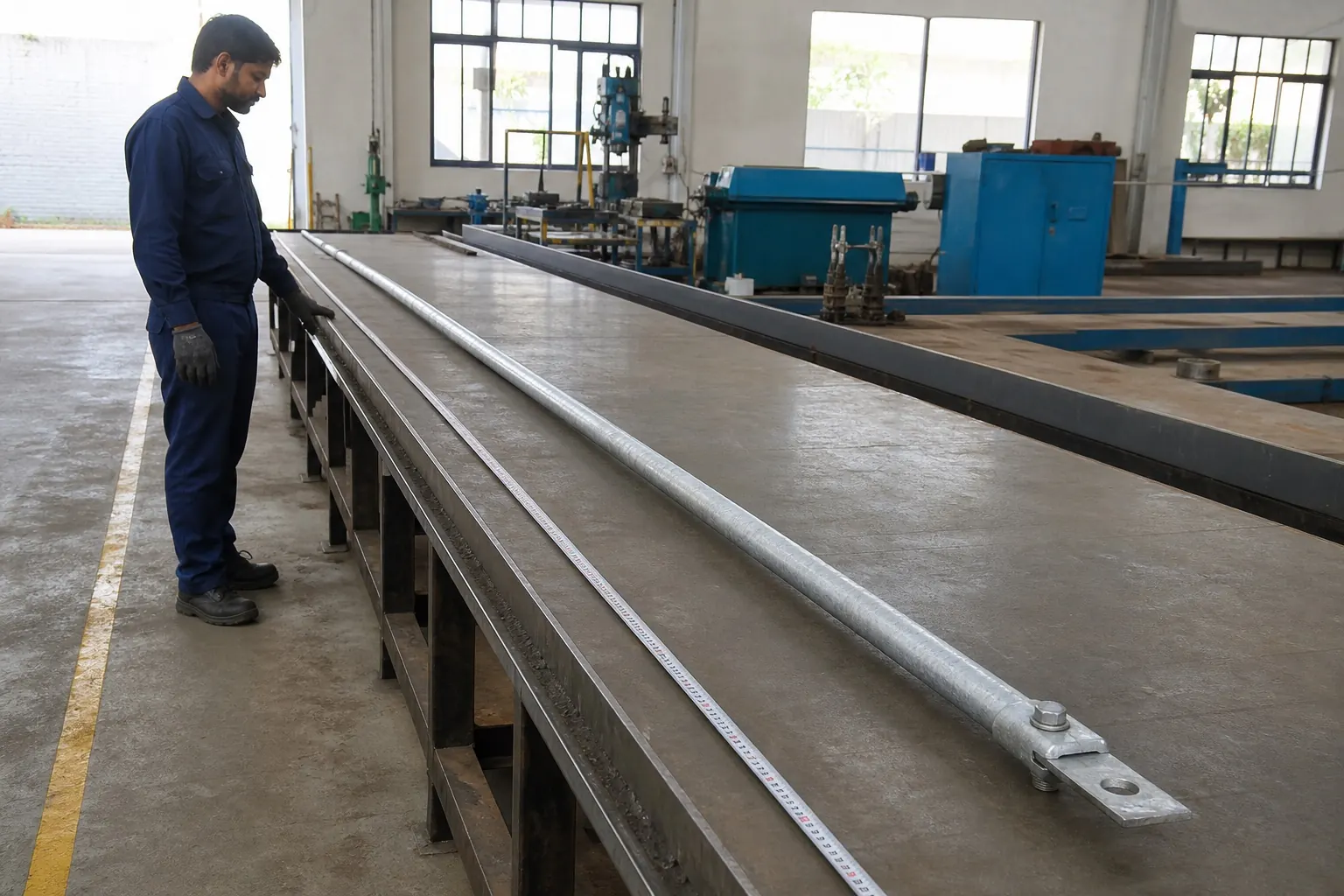
Full electrode length
The installed electrode must reach useful soil depth. Short display samples are not an installation specification.
Earthing electrodes
GI, copper and copper bonded chemical earthing electrodes manufactured in Jaipur for solar, industrial and building projects.
Discuss your requirementStart here
There is no universal electrode. Soil resistivity, fault duty, corrosion exposure and the space available for pits should decide whether a project uses GI, copper or copper bonded construction.
3E Solutions manufactures chemical and gel earthing electrodes in Jaipur, including strip in pipe formats used across solar and industrial work. Full electrodes start at 2 metres, and separate earthings need at least 2 metres of clear spacing during installation.
The installed electrode must reach useful soil depth. Short display samples are not an installation specification.
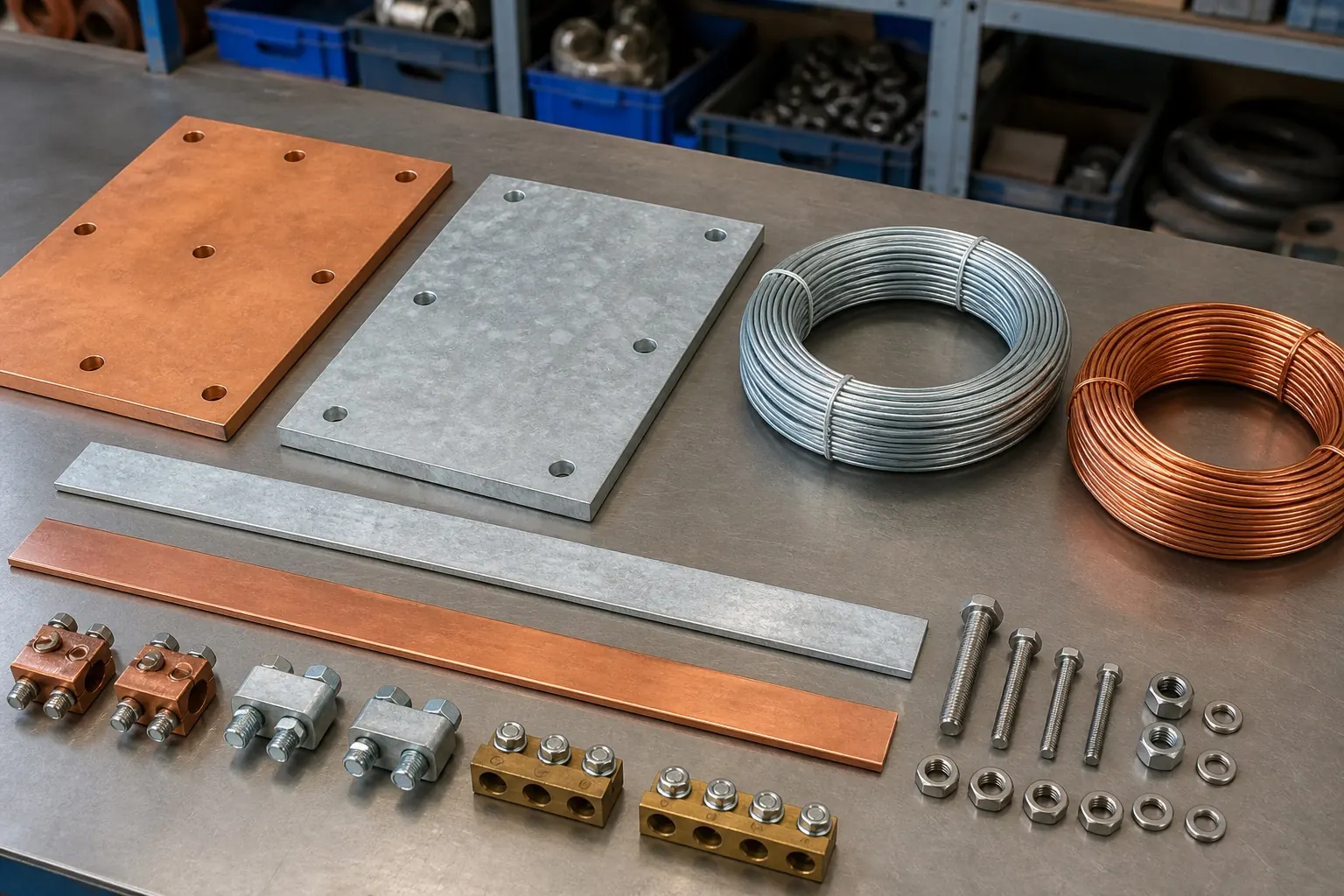
Galvanized iron, copper and copper bonded options suit different budgets, soil conditions and service expectations.
An 88 mm OD, 3 metre galvanized electrode with copper strip complied at 33 kA rms for 1 second and 70 kA peak at CPRI.
Technical view
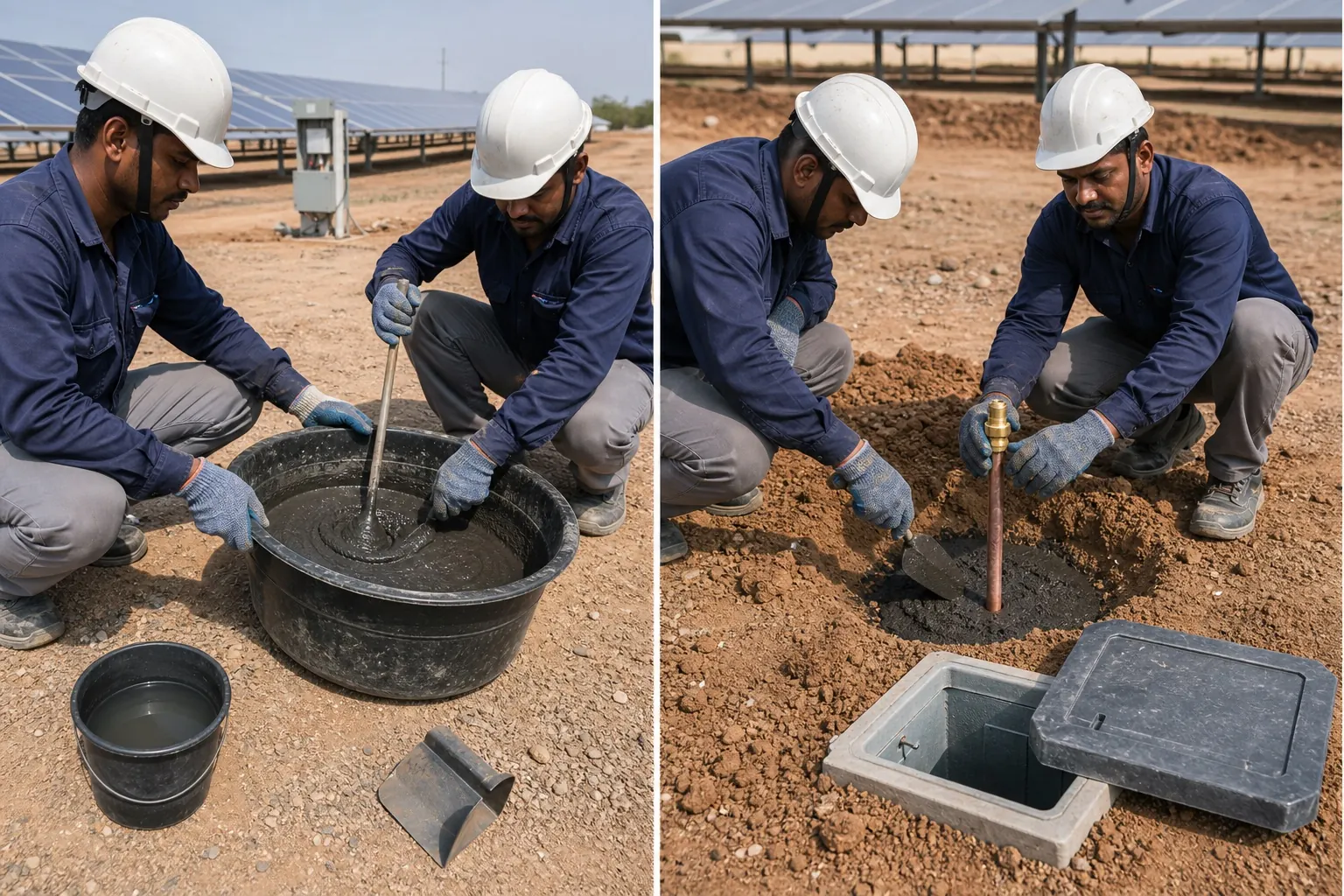
Maintenance-free describes an electrode and backfill arrangement intended to avoid the old practice of adding salt and water. It does not mean the earth can be forgotten. Connections, chamber condition and resistance still need periodic inspection.
3E supplies crystalline graphite and bentonite based backfill with listed electrode models. The installation manual calls for it to be mixed with water, then placed so useful soil remains around the working length.
Chemical earthing uses a purpose-made electrode with conductive compound inside or around the assembly. Conventional earthing may use a plate, pipe or rod arrangement built to the approved drawing. Neither name sets the final resistance by itself.
For 3E SIP and PIP electrodes, the company profile lists 50 mm and 80 or 88 mm outer sections in 2, 3 and 6 metre lengths with GI or copper inner conductors. Copper-bonded rods are a separate product family.
Explore this product family
Specification
Start with the site data. A quotation built only around diameter and price leaves the important engineering questions unanswered.
Method
The sequence starts with the duty and the ground. It ends with a measured reading and an inspection point that remains reachable.
Review soil and application data before choosing material or section.
Mark separate earthings at least 2 metres apart before excavation begins.
Place the full electrode, add conductive backfill and make a sound conductor connection.
Measure the installed resistance and record it. The number, not the paint finish, closes the job.
Questions from site and procurement teams
No. The documented 33 kA rms for 1 second and 70 kA peak result applies to a specified 88 mm OD, 3 metre galvanized electrode with copper strip. Other tested models have different reports and ratings.
The 3E installation guidance requires at least 2 metres of clear spacing between separate earthings. Preferably, the approved design also considers electrode length and the surrounding soil volume.
Send the application, required count, conductor material, length, available soil or resistance data, drawing and any utility GTP. That avoids pricing the wrong construction.
No. The term refers to the electrode and backfill approach, not a lifetime exemption from inspection. Record earth resistance after installation and check it on the maintenance schedule.
Bring us the site details
Send the application, drawing and any soil or resistance data. We will match the proposed construction to the available 3E model documents.
Contact 3E Solutions