
Electrode forms
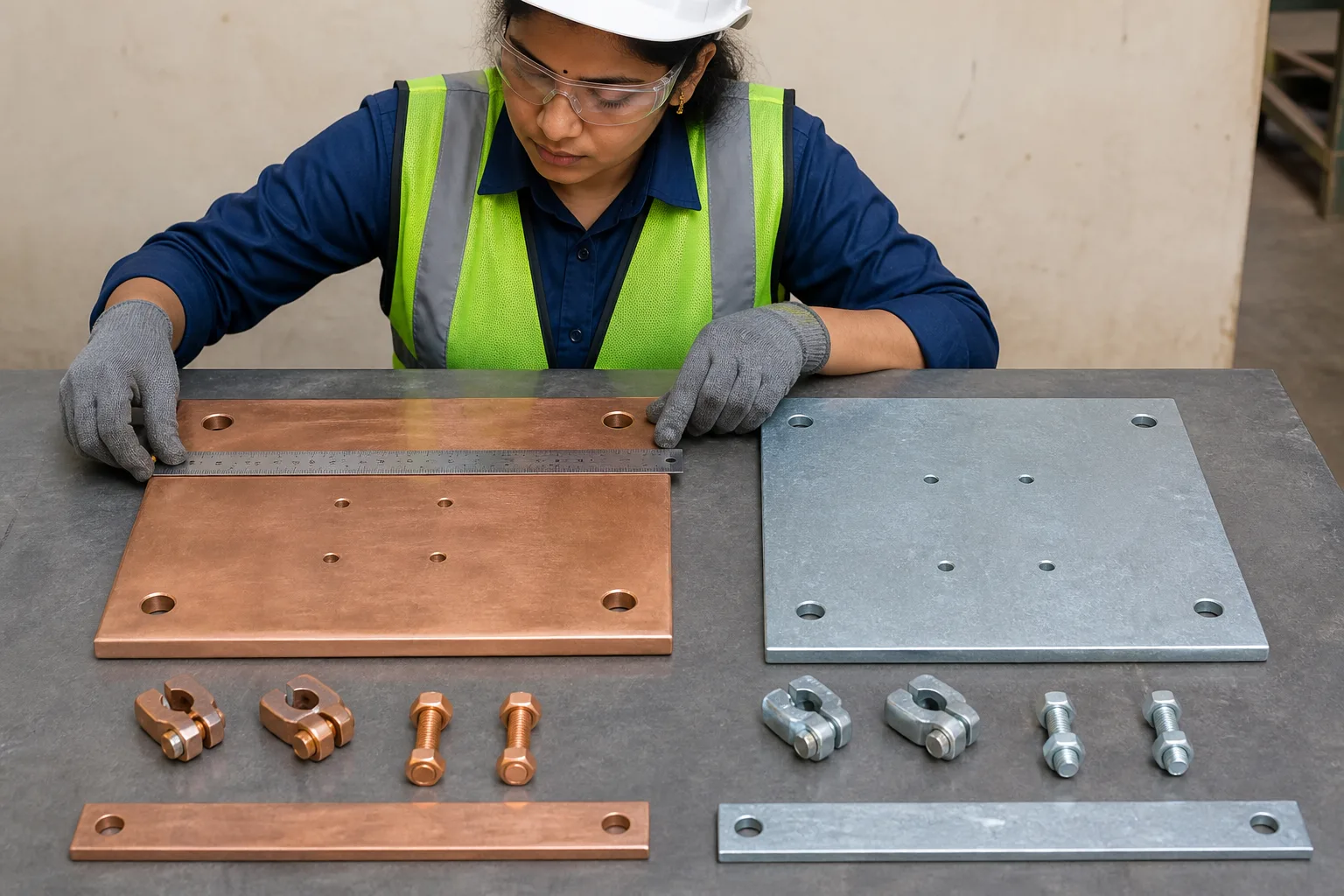
Plate, pipe or rod as required by the approved design
Earthing
Conventional plate, pipe and rod earthing design and installation guidance for Jaipur projects, including materials, burial and testing inputs.
Request a specification reviewDirect answer
Conventional earthing uses a plate, pipe or rod arrangement selected from the approved electrical design.
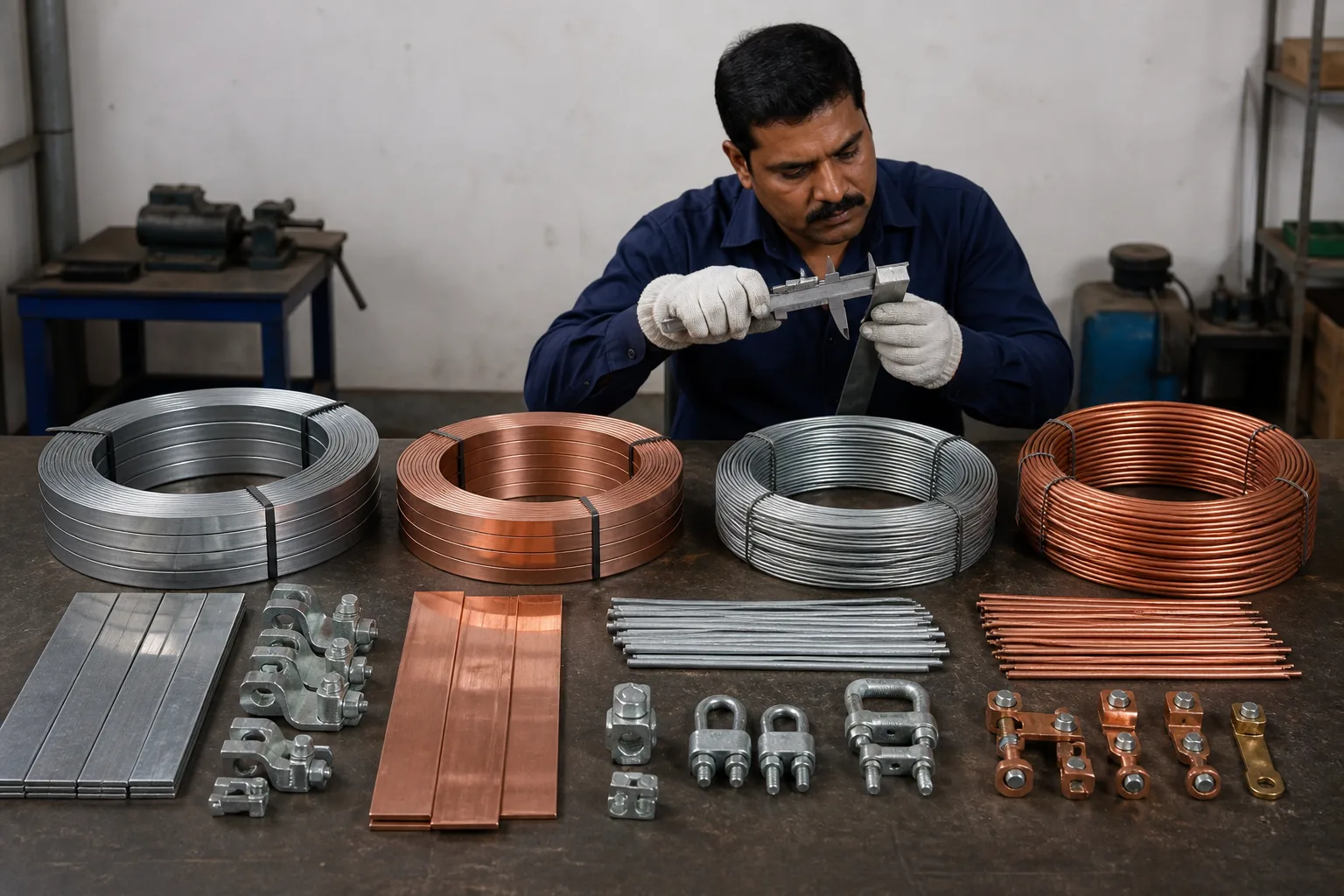
3E supplies GI and copper earthing materials for these systems. The electrode name is only the opening line, because soil resistivity, conductor route, fault duty and future inspection decide whether the installation works.
Plate, pipe or rod as required by the approved design
GI or copper, with interfaces and clamps selected for the exposure
IS 3043, IEEE 80, BS 7430 and applicable CEA requirements where relevant
Technical view
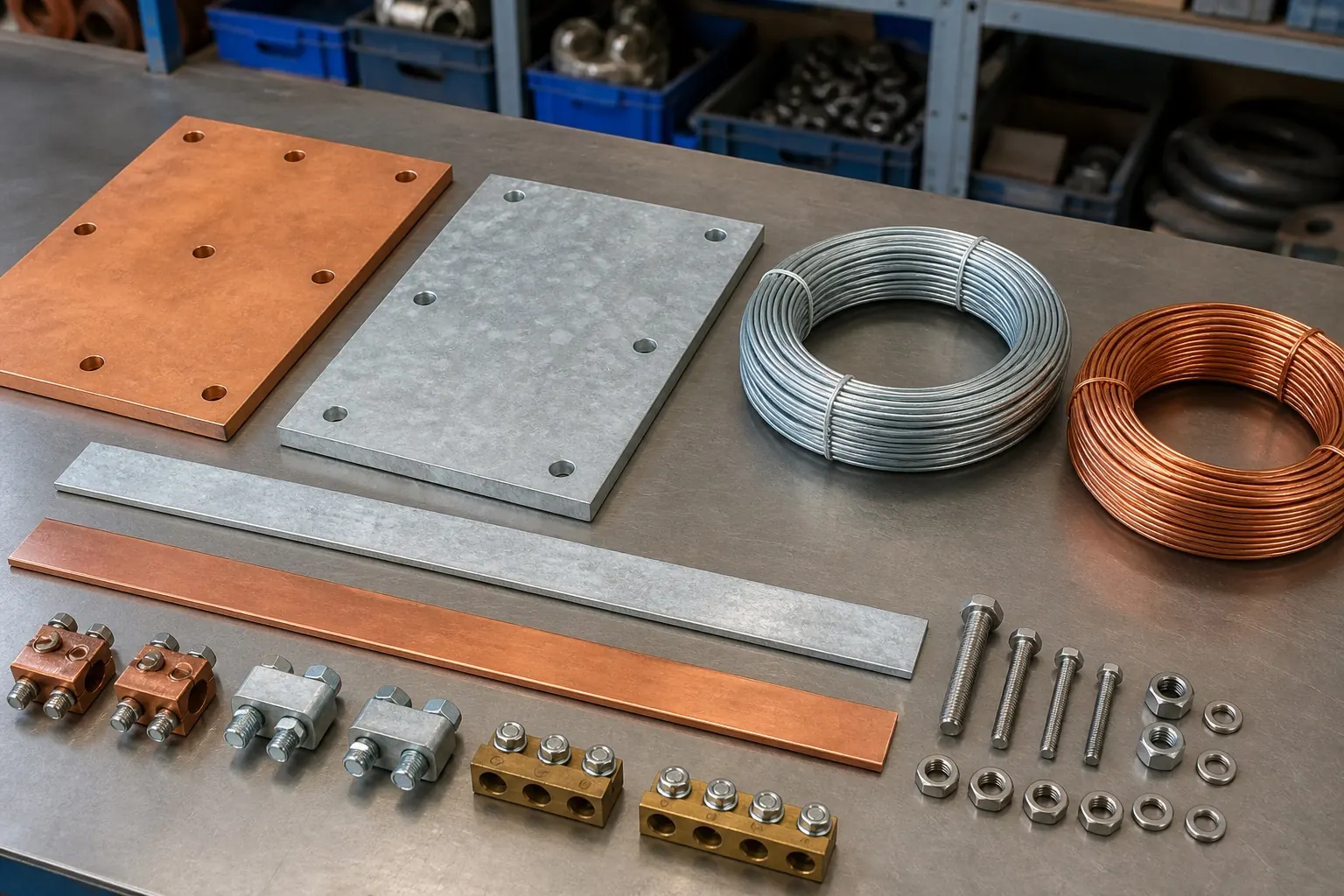
The drawing should answer that. Plate, pipe and rod arrangements remain useful where the consultant or utility specification calls for them and the available ground permits the required depth and separation.
The construction is different. A chemical electrode normally pairs a purpose-made SIP or PIP assembly with conductive compound, while a conventional layout follows the scheduled plate, pipe or rod detail and its specified soil treatment.
Specification
Dimensions are project-specific. The drawing should state the electrode, conductor and connection details before anyone prices the work.
Applications
Use the application to settle the duty, material, dimensions and evidence required in the offer.
Protective earthing for panels, machinery and metalwork within the approved distribution design.
A separately identified duty where the transformer or generator scheme requires it.
The below-ground end of a complete lightning current path, coordinated with bonding and down conductors.
Questions from site and procurement teams
No. Plate, pipe and rod systems remain valid when they are part of an approved design and suit the soil, fault duty and maintenance plan.
Do not add it by habit. The older 3E catalogue notes that salt can leach and promote corrosion, so the approved drawing should control the soil treatment.
They can appear in one project, but each construction should be named clearly. Do not hide different products behind the generic word earthing.
Bring us the drawing
Send the duty, electrode detail, conductor section, pit count and soil information. We will separate confirmed supply items from site-specific work.
Send the requirement on WhatsApp