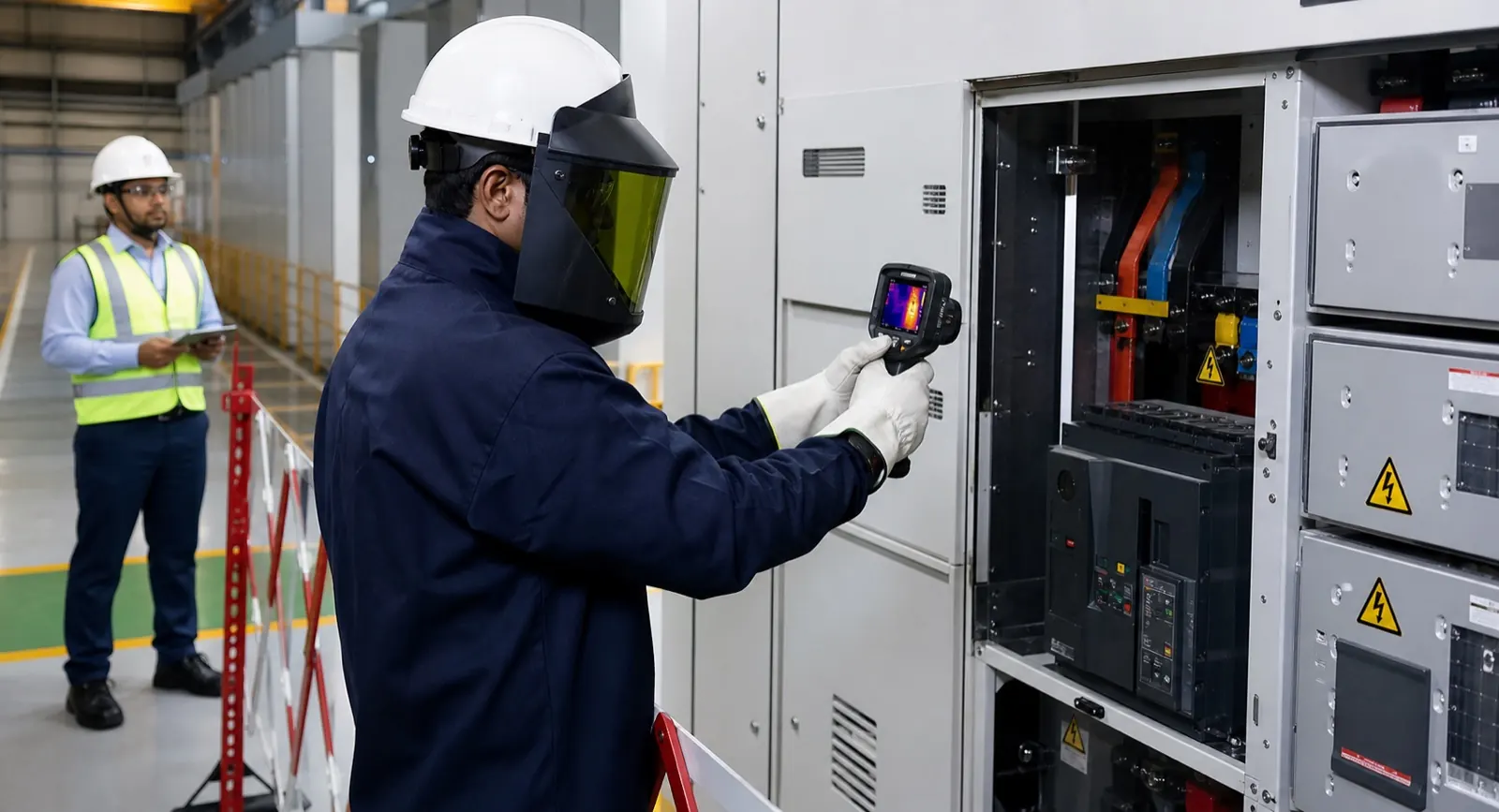
Panel thermography
Thermal patterns are reviewed with operating load and equipment context, not as isolated pictures.
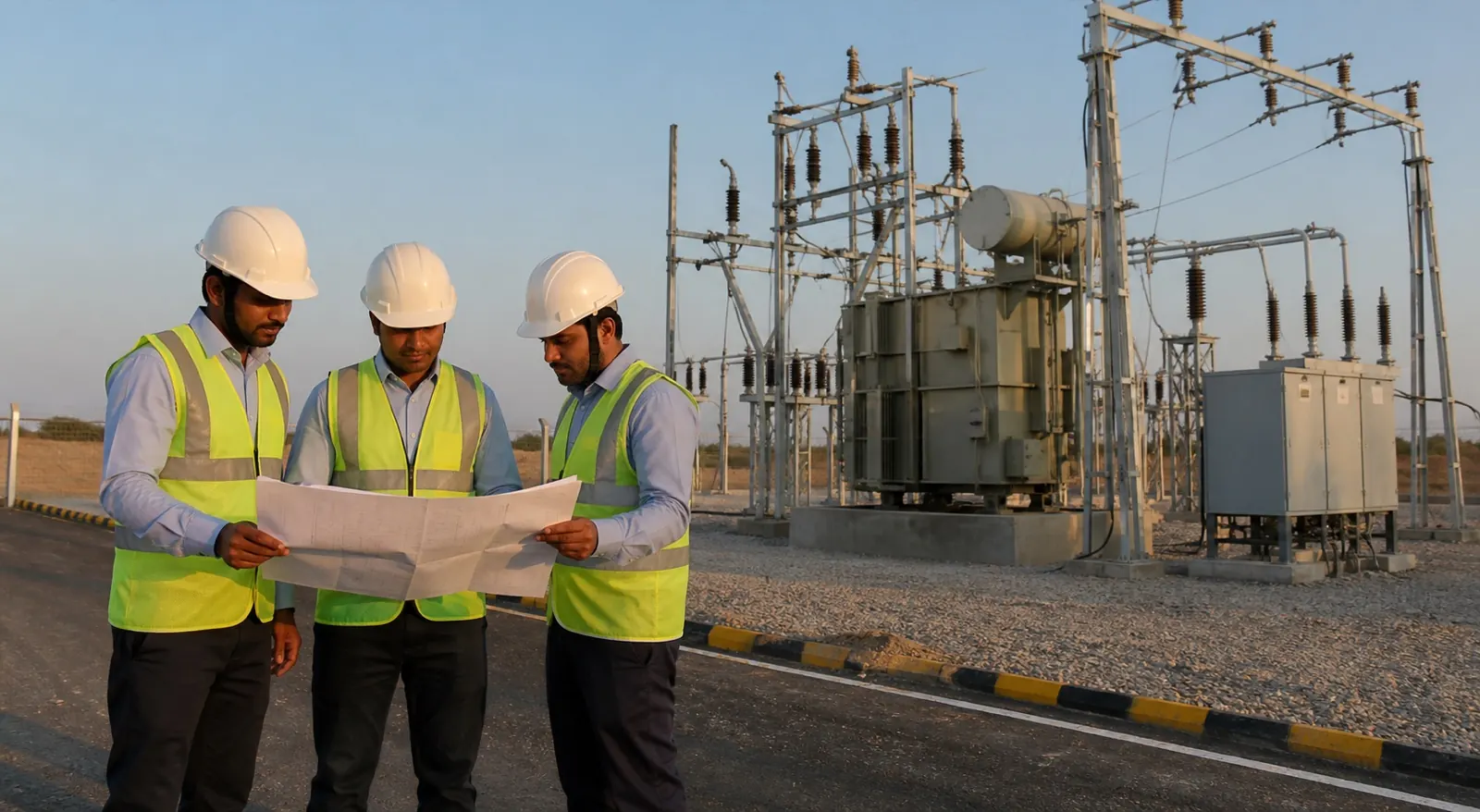
Electrical safety audit
Electrical safety audits, panel thermography, load review, harmonic checks and earthing tests for facilities across Rajasthan.
Discuss your requirementStart here
A useful audit finds the conditions that can lead to shock, burns, equipment damage, fire or an avoidable shutdown. It should connect each observation to a practical correction, a priority and enough evidence for the maintenance team to act.
3E Solutions reviews panels, load distribution, harmonics, earthing and site practice across industrial and commercial facilities. Thermography is part of the work where relevant, but a colourful heat image without load context can be surprisingly unhelpful.
Thermal patterns are reviewed with operating load and equipment context, not as isolated pictures.
Load balance and harmonic content can expose stress that a visual walk-through misses.
Earth pits and protective connections are checked where the agreed scope requires measurement.
Technical view
No. Thermography records surface temperature patterns under the load present at that moment. A safety audit also reviews protection, conductor condition, earthing, access, isolation practice and the maintenance record.
Load context matters. A warm joint at light load may deserve more attention than a hotter component operating within its expected duty, so the report should preserve the measurement conditions.
A useful report ties each observation to a location, photograph or reading, then assigns a practical priority. Urgent shock or fire hazards should not be buried beside labelling and housekeeping notes.
The visit plan also needs access and shutdown boundaries. Some tests can be made while equipment operates, while others require isolation and customer safety control.
Specification
Scope should follow the facility risk. A small commercial building and a process plant do not need the same checklist, even when both have electrical panels.
Method
The visit is planned around the operating facility. Measurements are taken under representative conditions where safety and access allow it.
Review drawings, connected load, recent incidents and known problem areas.
Observe the installation while representative equipment is operating where it is safe to do so.
Use thermography and electrical tests where evidence is needed.
Separate urgent hazards from planned maintenance and longer capital work.
Questions from site and procurement teams
3E Solutions is led by Rakesh Kumar Jain, a BEE Certified Energy Auditor and Chartered Electrical Engineer with more than 30 years of electrical engineering experience.
Not for every observation. Thermography and load measurements often need representative operation, while selected inspection or testing requires isolation. The scope should name both conditions.
Duration depends on connected load, panel count, operating shifts, drawings, test scope and access. Share the single-line diagram and asset list before asking for a visit duration.
Facility size, travel, number of systems, instrument time, shutdown visits, reporting depth and whether corrective verification is included all affect the quotation.
Bring us the site details
Send the single-line diagram, connected load, panel list and recent incidents. We will separate visual checks, live measurements and shutdown work.
Contact 3E Solutions