
Tray form
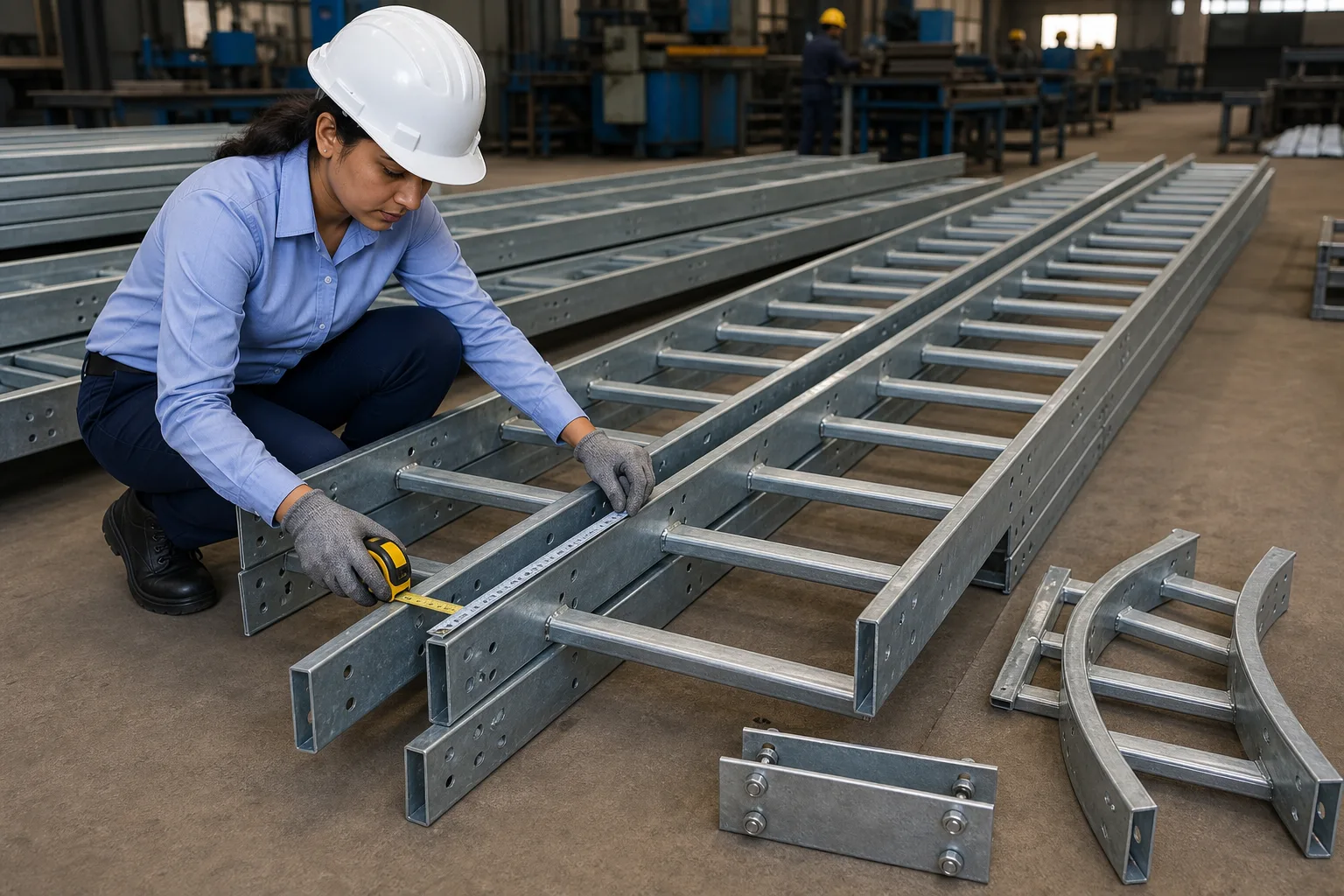
Two side rails with scheduled rungs and joining hardware
Cable management
Ladder cable trays manufactured in Jaipur against cable load, rung, rail, finish, fitting and support requirements for industrial routes.
Request a specification reviewDirect answer
Ladder cable tray supports cables on spaced rungs and leaves the route open for ventilation, restraint and inspection.
3E lists ladder tray within its cable-management range. Rail depth, rung spacing, sheet section, finish and support span remain project inputs, because the supplied profile does not publish one load table for every construction.
Two side rails with scheduled rungs and joining hardware
Project enquiry input
Project enquiry input based on cable restraint and load
Technical view
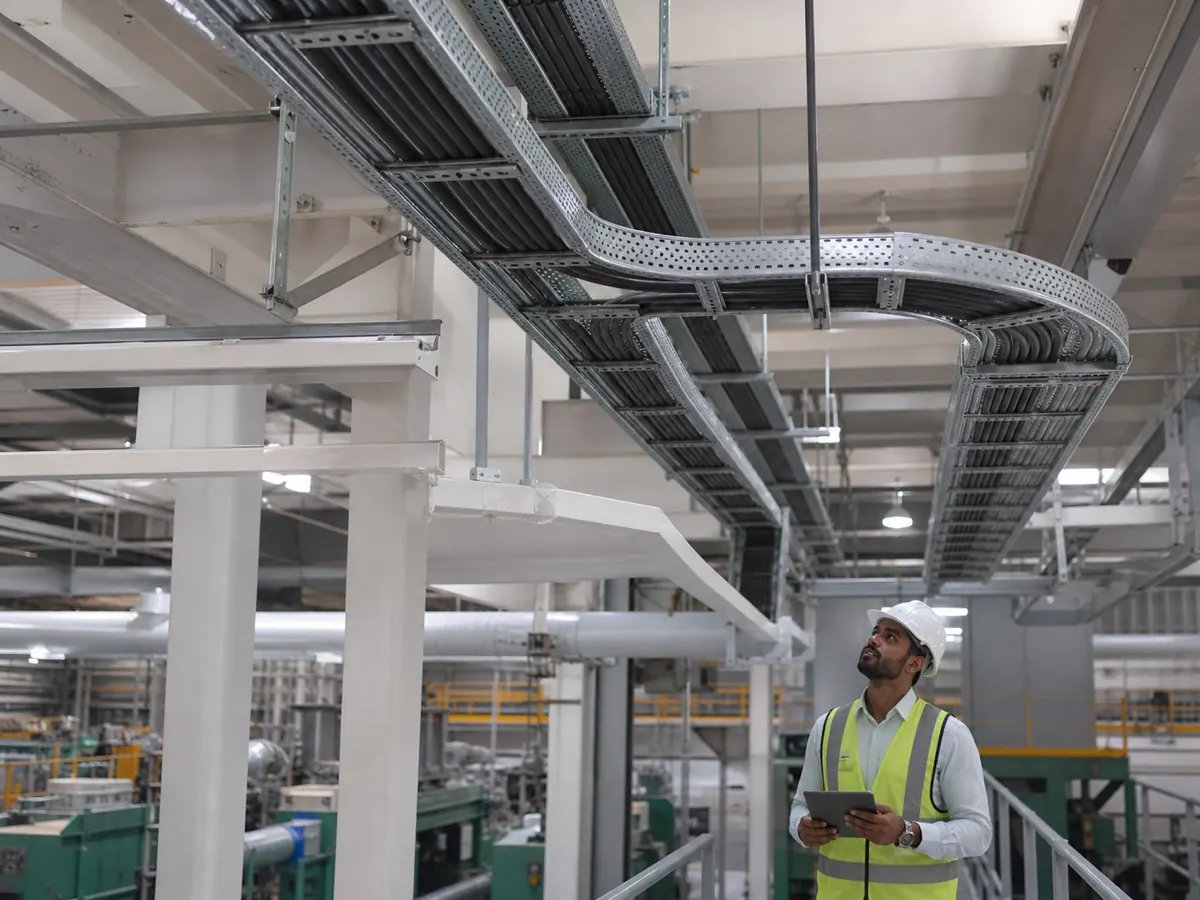
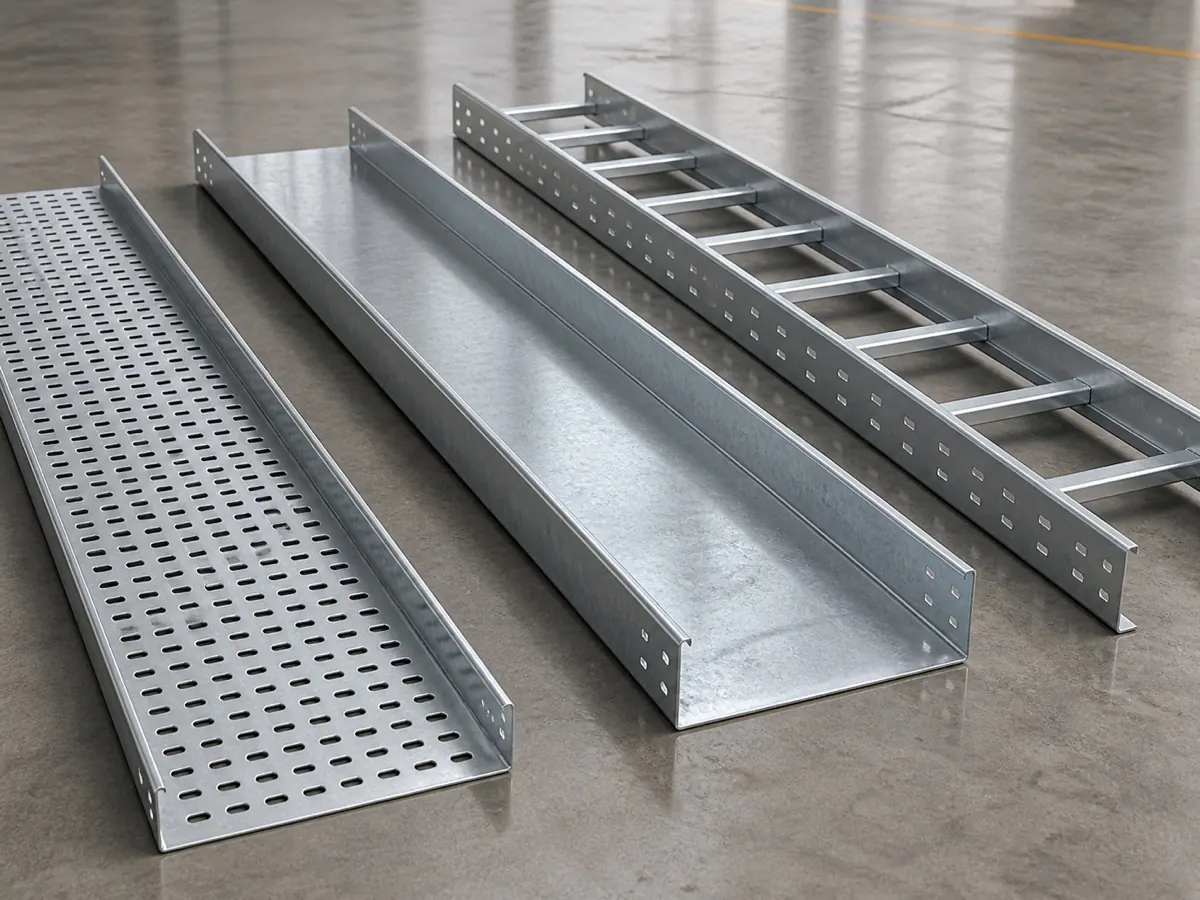
Think about cable weight. Ladder construction suits heavier power runs that benefit from ventilation and regular restraint, but rail and rung sections still need to match the actual load and support spacing.
Not without planning. Cable bend radius, vertical drops, tee points and support steel need to be drawn before fabrication, otherwise the route acquires improvised cuts at the hardest locations.
Specification
The source documents confirm the tray form and available finish families. Structural dimensions and load data need the project schedule.
Applications
Use the application to settle the duty, material, dimensions and evidence required in the offer.
Heavier industrial cable runs with planned restraint and support points.
Routes coordinated with equipment access, earthing and cable bending limits.
Straight and rising routes where ventilation and inspection access matter.
Questions from site and procurement teams
The supplied documents do not publish a universal load table. Send the section, cable load and support span for a project-specific check.
The restraint method follows cable type, route and design. Vertical and high-fault routes deserve particular attention before the hardware is ordered.
The 3E range documents pre-galvanized, hot-dip galvanized, MS painted and powder-coated tray finishes. Confirm the selected construction in the offer.
Bring us the drawing
Send the cable schedule, width, rail and rung detail, support span, fittings and finish. We will flag the missing fabrication inputs before quotation.
Send the requirement on WhatsApp